I had no idea what I was in for when I arrived in South Korea on a yearlong English teaching contract. Living in LA, Korea Town had been a popular late-night destination for Korean BBQ and bubble tea, but that was pretty much all I knew about the food culture. My new job was in the capital city of Gangwon-Do province and having just arrived, I was unfamiliar with the Korean predilection for massive quantities of sugar…
I’d begun working the day after my arrival and was crazy-busy figuring out how to do the job I’d been hired for, had never done before, and that nobody there would tell me a thing about. Finally able to relax enough to draw a full breath after a couple of outrageously intense weeks, I had time to explore my surroundings. The first thing I discovered was a bakery on the ground floor of the building in which my school was located called Joyful Breads.
Wondering why an emotion would be attributed to bread, I went in to see if I could find a loaf of whole grain bread that would take the edge off my homesickness. I was dismayed to find no joyful bread, or anything that even resembled bread, but a vast selection of unidentifiable baked goods. I’d seen my Korean coworkers gobbling up incredible quantities of weird-looking pastries on a daily basis and figured they needed the sugar high to deal with the continuously screaming Korean kids. I decided to join the club and maybe buy a blueberry muffin for later.
The walls were lined with shelves containing rows of baskets and a center island also packed with baskets. Seeing it might take me an hour to find a blueberry muffin I was grateful my next class period was free. Each basket had a little laminated label with the price, the name in Korean, and a name in English for the sugary items within. Some things looked like buns. Some things looked like pastries. Some things looked like crustless pies. Some things looked like thick oval pancakes. Some things looked like nothing I’d ever seen before.
What they all had in common however, was a mind-blowing amount of sugar and an inane name that in no way indicated what they actually were. Morning Happy Bun. Daytime Sweet Health. Brave Nuts Cake. Mocha Fantasy Daydream. Plentiful Soft Bread. Sweet Ecstasy Pastry. Super Cheese Pleasure. Beautiful Day Delight. Steam Bean Dream. Strewn Dawn Pastry – Strewn with what, one wondered…
Unable to find anything remotely resembling a blueberry muffin I took my chances with a Brave Nuts Cake since it kinda looked like a muffin. Topped with nuts rather than a sack of sugar, I went for it and was overjoyed when it turned out to be a delicious cinnamony, spicey cakey thing with walnuts that wasn’t overly sweet. Showing it to one of my colleagues I learned that it was a steam cake, the Korean version of a muffin that’s cooked in a steamer basket.
When I returned another day, the only steam cakes in sight were called Potato Love Cake, pale orange in color and topped with what appeared to be boiled chunks of sweet potato. Thinking to myself The walnut one was good, how bad could it be? I bought one. The combination of sweet potato, a ton of sugar, and a lotta seaweed was truly disgusting. Taking a bite in my office and almost choking, I spit the gross gob of gak into my trashcan and looking up, saw that I’d been observed by the school librarian who looked outraged by my having spat a precious piece of Korean culture into the trash.
With my new awareness of the prodigious quantities of sweets eaten by my coworkers I now noticed most of the students consuming equally enormous quantities of sugar on a daily basis. My afternoon classes were with elementary school kids who came for English instruction when let out from school. Stopping at the Joyful Breads bakery for an afterschool snack, they arrived in the classroom early to enjoy their afternoon sugar fix. A popular treat was a hotdog nestled into a flaky pastry topped by red and white stripes of what I assumed were ketchup and mayonnaise.
When a student offered me one, I was obliged to accept it, as Korean culture stipulates unconditional acceptance of anything given as a gift. She insisted I try it on the spot and with all the students watching, I took a big bite. Big. Mistake. The white stuff wasn’t mayo, it was frosting. After that ghastly shock, whenever a student offered something edible, I would thank them for the gift, look them in the eye, and lie saying I wasn’t allowed to eat food in the classroom but would save it for my break.
And once back in my office, I’d toss the offending food item into my backpack for disposal in the privacy of my own home.
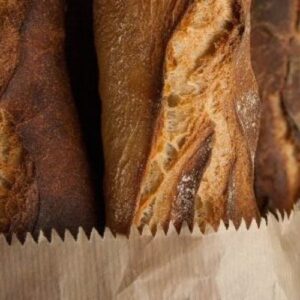
Not having enjoyed any Western style bread for months, I became ridiculously excited when I saw something called French Baguette Bakery on one of my exploratory walks in search of recognizable food. Venturing inside in the hope that the shop name actually had something to do with what was sold there, I was thrilled to see a large rack of crusty baguettes on display.
I took one to the counter to pay for it but instead of ringing it up, the smiling saleslady adroitly mutilated my precious baguette, slicing it and arcing it backwards to widen the spaces. When she swabbed the spaces with big dollops of what looked like butter and smelled like garlic, I figured garlic bread wouldn’t be so bad and my panic subsided. Finishing with a liberal sprinkling coarsely ground sea salt over the entire baguette, she carefully placed it in a paper bag, tossed in a bit more salt, and handed it over.
It was just like that sequence in the Richard Curtis film Love, Actually where Alan Rickman is buying an illicit Christmas gift for his girlfriend at a department store while his wife is upstairs shopping, and jewelry salesman Rowan Atkinson of Mr. Bean fame performs an elaborate and lengthy ritual of gift-wrapping it as Alan Rickman shits kitties over his wife’s imminent return…
In celebration of eating a real baguette for dinner, I made a pasta marinara using linguine sent to me by a thoughtful friend in LA that would be perfect with the garlic bread, and I even had a bottle of Bordeaux wine purchased at great cost from a nearby department store. Totally stoked at the prospect the delicious Western meal that would taste so fabulous after months of unidentifiable Korean food that all smelled or tasted like fish, I set the table, lit some candles, and poured myself a glass of wine.
Although some of the sea salt had shaken off the baguette on the walk home, most remained embedded in the garlic butter when I put it in the oven to heat. It was nicely browned and smelling wonderful when I removed it and ripped off a large hunk to have as an appetizer with my wine. Bread in hand, I sat down and took a satisfying gulp of wine in gratitude for this unexpected luxury before taking a bite of the baguette. And promptly gagged on the extraordinarily horrific taste of sugary garlic on top of a vintage French red wine.
Come on! Sugar? On a baguette spread with garlic butter? Seriously?
It took me about three seconds to realize that what I’d thought was coarsely ground sea salt was in fact, coarse crystals of sugar. Angrily stuffing it back into the paper bag, I hurled the baguette into the kitchen trash and returned to my wine. Fortunately, the linguine was delicious and the 750 ml of Bordeaux definitely went the distance in diminishing the pain of the gastronomic travesty masquerading as garlic bread.
I should have known that with their proclivity for all things sweet, the Koreans would find a way to insinuate sugar into a garlic bread baguette. Amazed that I’d forgotten the lesson of the Potato Love Cake along with the ketchup and frosting-laced hotdog, it took more than a week before I stopped berating myself for having been lulled into complacency by the possibility of an actual French baguette.
The next time I went to the French Baguette Bakery and chose my crusty baguette, I retained a firm grasp on it as I handed the saleslady my money and thanking her, left the shop under her enigmatic gaze that well could have been her best version of a Korean stink eye.
